Micro-Production
Development of equipment and technology for low-cost, deep processing of fibres in monosahara and further into biobutaneol and protein vitamin additives to CCF feed
Production of biobutaneol from agricultural and forest waste
Bhutanol is used as:
- solvent in the lacrost industry,
- of many organic compounds
- components to conventional fuels or as independent fuel for vehicles.
It also addresses the problem of recycling debris.
The main scientific challenge is the destruction of pulp to the state when enzymes start working.
The use of mechanical treatment is one of the most universal applications for pulp and wood products. Since pulp increases the availability of pulp in wood.
Improvements in mechanical processing results are achieved through pre-irradiation (materials become more fragile and easily diluted) and (or) ozone-depleting applications.
Establishment and testing of a pilot flame-reduction plant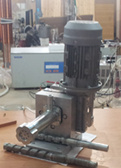 The main parameters were calculated and the schematic project of the aggregate was completed.
(wheeling to particles of 0, 2...0, 5 um)
Work has been done on the impact of electro-mechanical (electrolysis) on flame retardants, showing a 7 to 10 per cent increase in sugar output.
Laboratory-based research has been carried out in the pilot facility to determine the compressed pressure of the working range. This was taken into account in designing a large unit.
A cycle of destruction of lignine by ozone and the study of processes taking place in pulp with mechanical effects on flame retardants is being carried out in conjunction with the Institute of Physical Chemistry.